

Sometimes you catch a break. A big one.
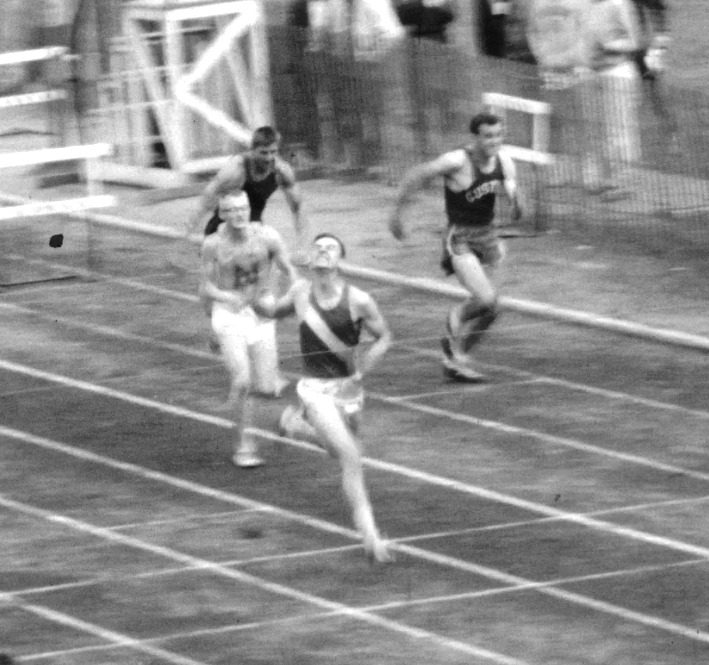
Van Bassindale, the Bays head track and field coach, found a box containing Kodak films purporting to be from long-ago eras. He contacted baystrack and the result is that the films are now available on the baystack YouTube site. A huge shout-out to Coach Bassindale for realizing the value of what was in the box. Van was an outstanding athlete at the Bay in football and track, graduating in 2016. He’s an English teacher at the Bay, mostly freshmen and sophomores.
There are 27 reels that are about three minutes each. They basically separate into two eras. 1937-1942 and 1962-1966. Both were great eras for Bay track. All but the two 1966 reels were shot on a 16mm camera. 1966 was Super8.
There are four reels from 1946. Two of track practice and two of a preseason football scrimmage against a team I can’t identify.
If you asked my dream scenario for what would be in the box, I’d have said the 1962 State Meet and the 1966 State Meet. Both are there. Unbelievable.
My guess is that films were shot almost every year and most of them walked themselves out the door over time. I’m grateful for what is left.
The Bay wore light gray jerseys from 1937-1942 and had no standardized trunks.
The 1937-1942 reels have a bunch of guys I’ve written about. Paul Klein sprinting and jumping, Bob McCahill throwing and sprinting and the 1942 guys sprinting, hurdling and in a relay.
1937 Triangular. Waukesha, West Milwaukee, Whitefish Bay at Haertel Field in Waukesha.
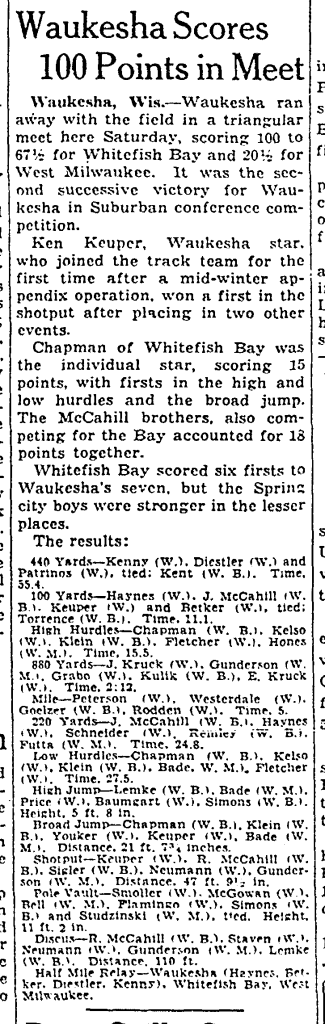
Continuation of the Triangular and then the 1937 State Meet at Camp Randall. The State video shows Gary Chapman and Paul Klein in the Broad Jump, Chapman winning the 120 High Hurdles towards the end, Klein in the 100 and Marv Lemke in the High Jump.
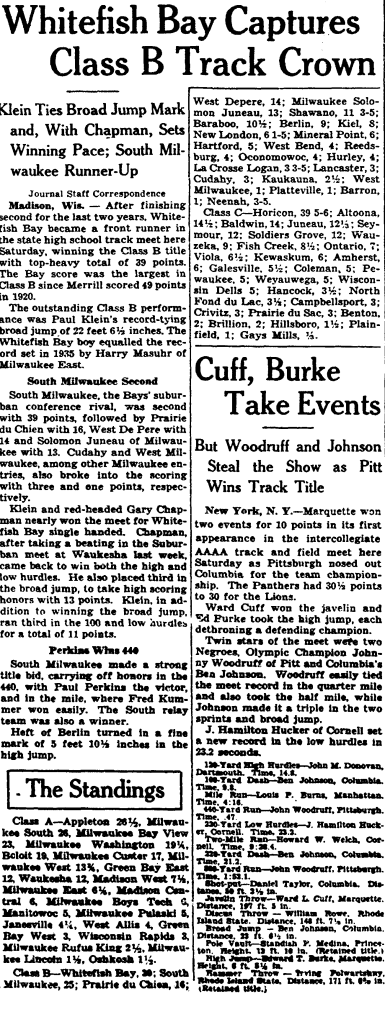
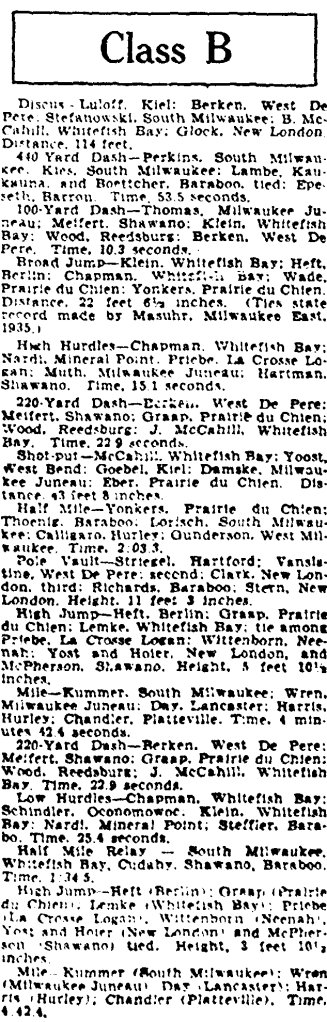
1937 Suburban at Haertel Field, Waukesha. Same guys. It looks like it could have been a Bay guy that took a header into the Broad Jump pit near the end of the 880.
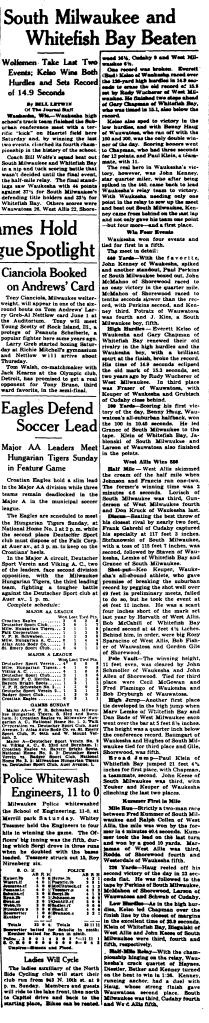
1938 Miscellaneous.
A lot of Bob McCahill throwing and practicing starts. Those four girls were certainly checking out his “throwing technique” while pretending disinterest. And the kid riding up on his pride and joy Schwinn behind Coach Caulkett. Great stuff.
1942 Suburban Outdoor
Two clips, with two treats at the end of the first. Jim Pflugradt winning the 100 and then overall State record holder Phil Valley winning the 120 High Hurdles, with Bob Albrecht in second. The second clip is mostly the winning 880 Relay with Gene Freedman, Frank Van Deman, Muir McKee and Phil Valley.
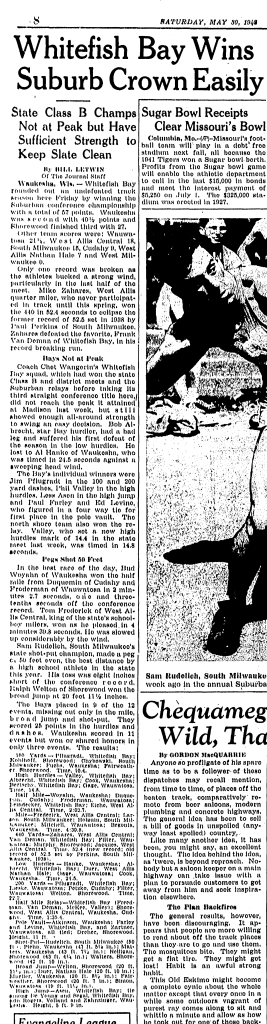
Two clips of Bay track practices in 1946 and then two clips of a 1946 Bay football preseason scrimmage. I don’t know the opponent.
I’ve written about the 1962 to 1966 guys a bunch of times.
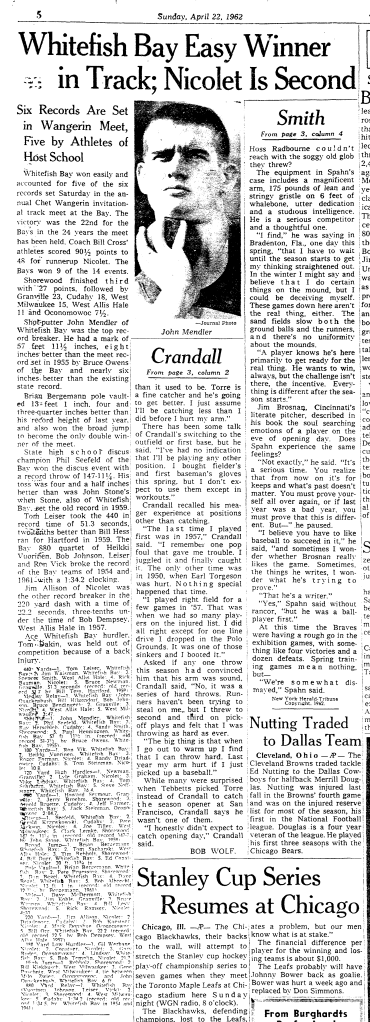
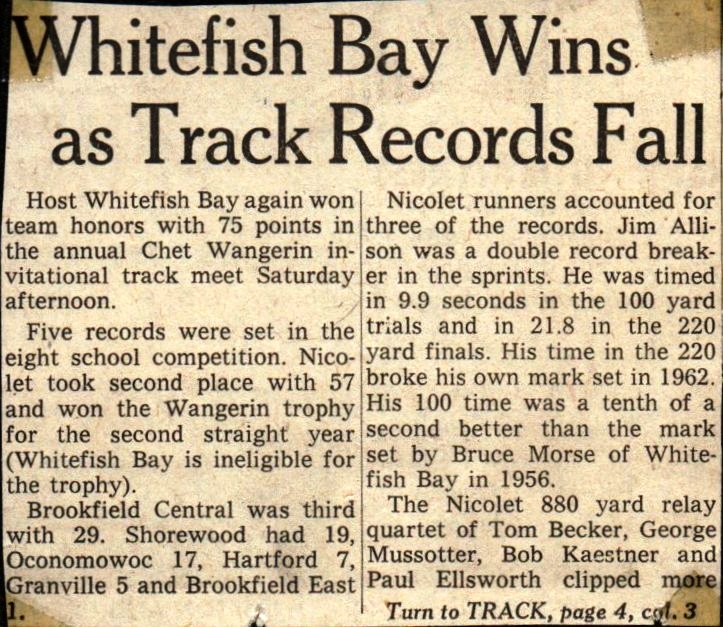
1962 Wangerin
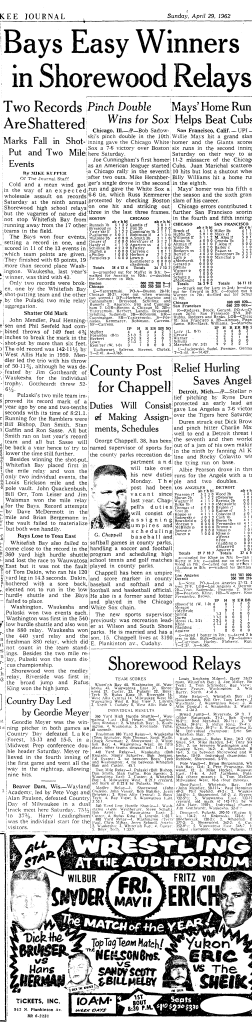
1962 Shorewood Relays.
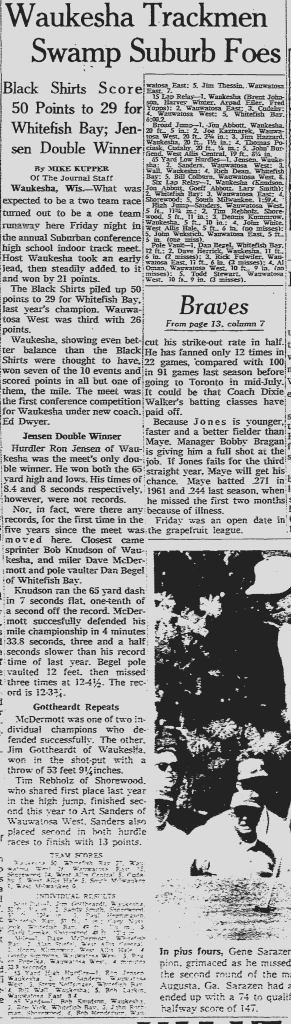
1962 Suburban Relays.
Brian Bergemann clears 13-7 landing in wood chips.
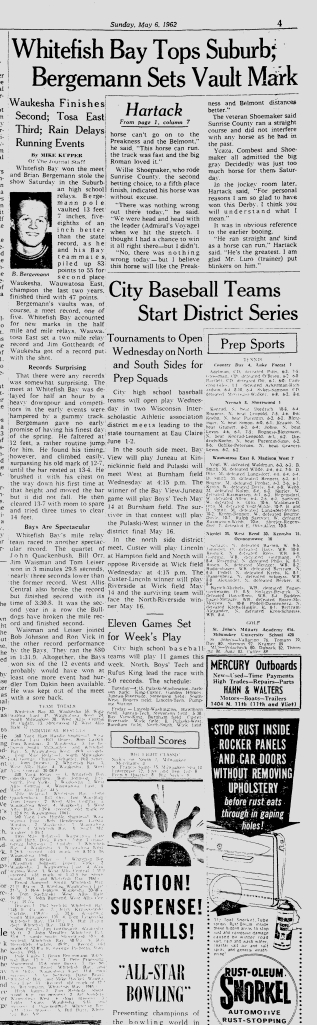
1962 Sectionals
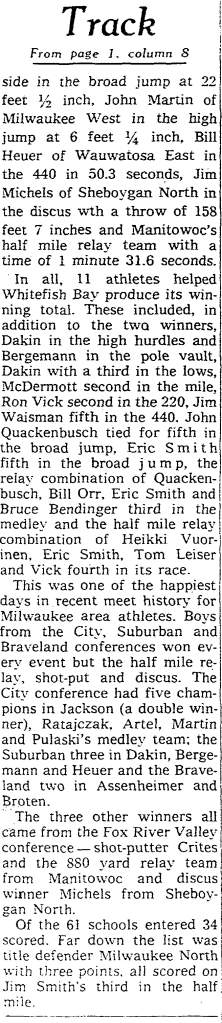
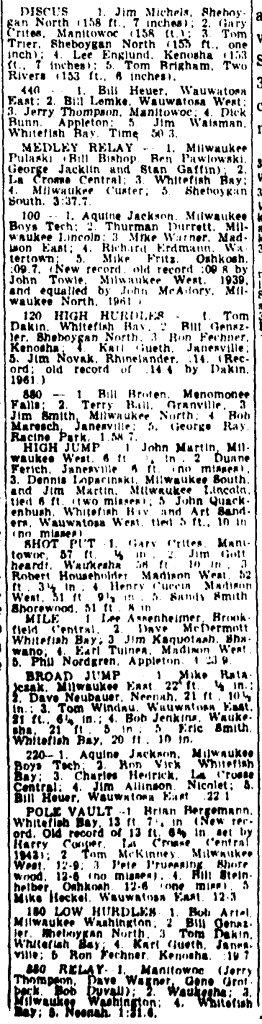
Tom Dakin’s hurdles form was good. Tom Leiser set the Bay 440 record at 50.9.
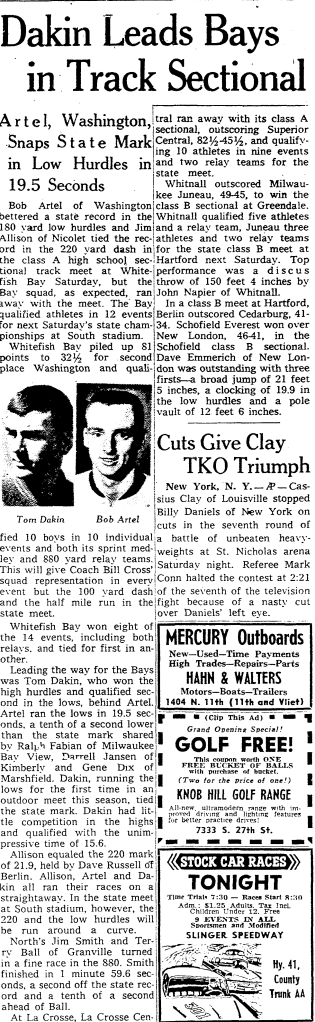
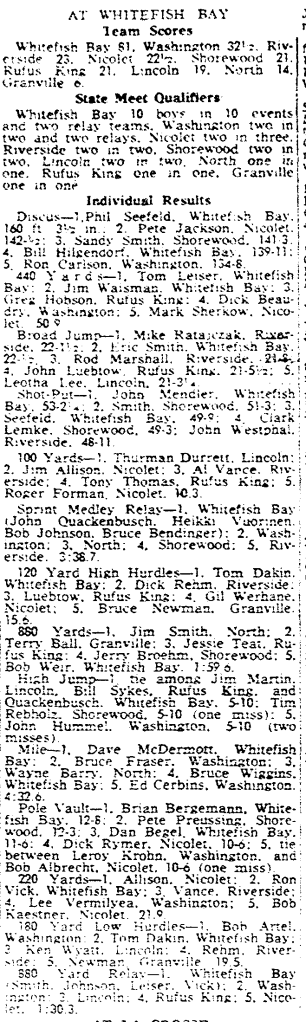
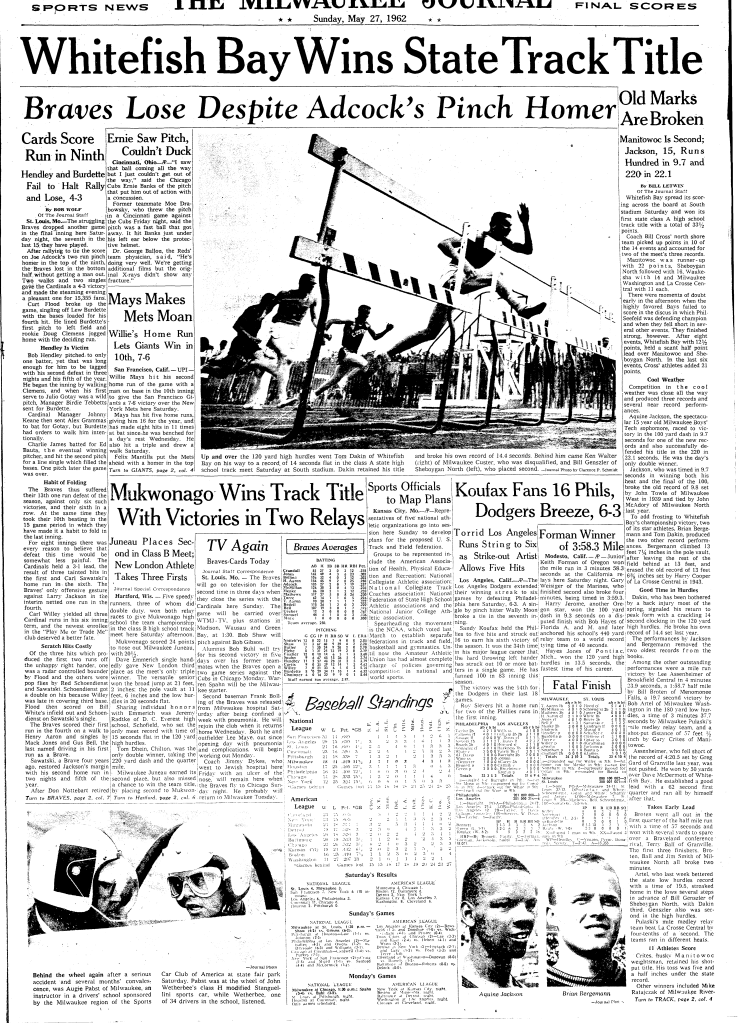
1962 State. Two clips.
The Bay placed in 10 of 14 events and finished sixth in two others. This was a phenomenal team. Tom Dakin’s Funky Chicken rendition at the end of the 120 High Hurdles is pretty good. The end of the second clip has coach Bill Cross with team captains Brian Bergemann and Tom Dakin (wearing his trademark beret) accepting the trophy.
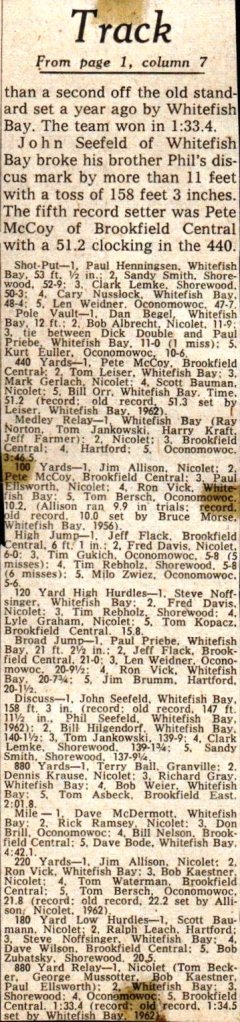
1963 Suburban Relays
Bill Hilgendorf, Tom Jankowski and John Seefeld throwing the Discus is the highlight.
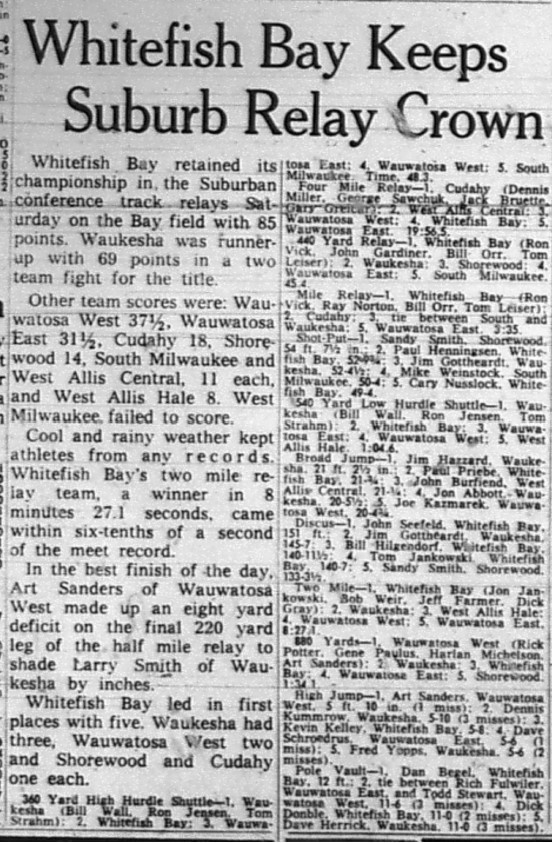
1963 Sectionals
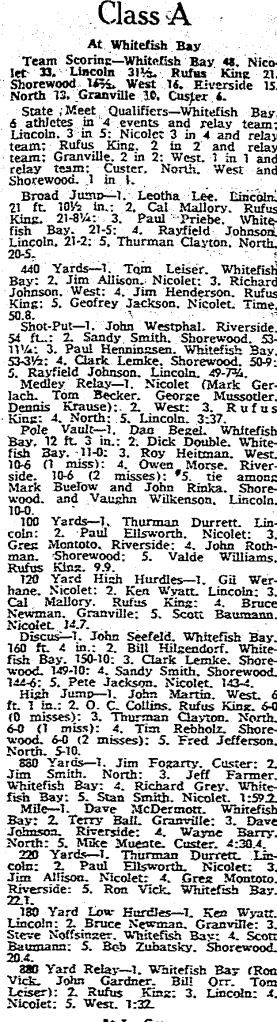
1964 Suburban Indoor
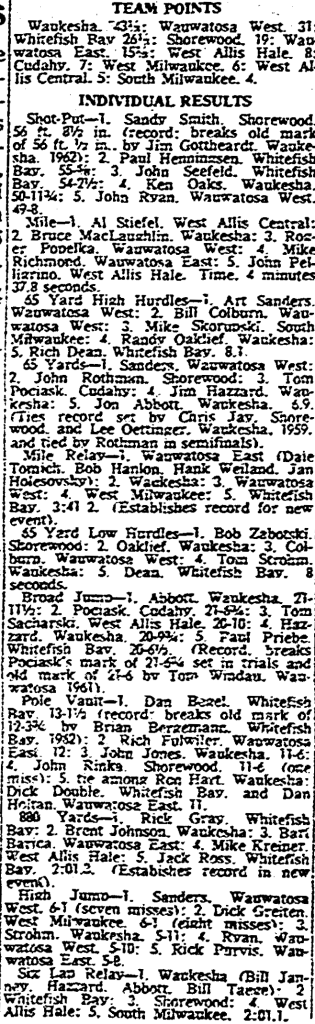
1964 Suburban Relays
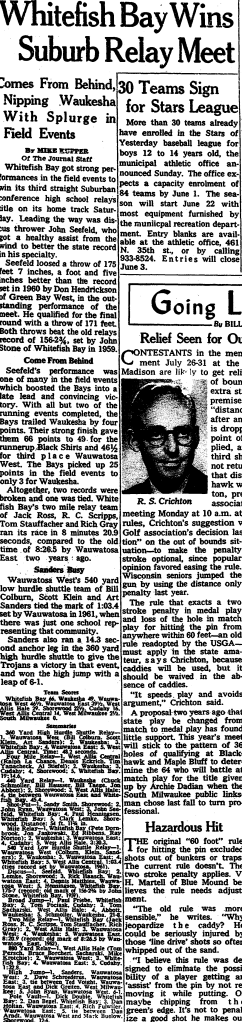
1965 Suburban Indoor
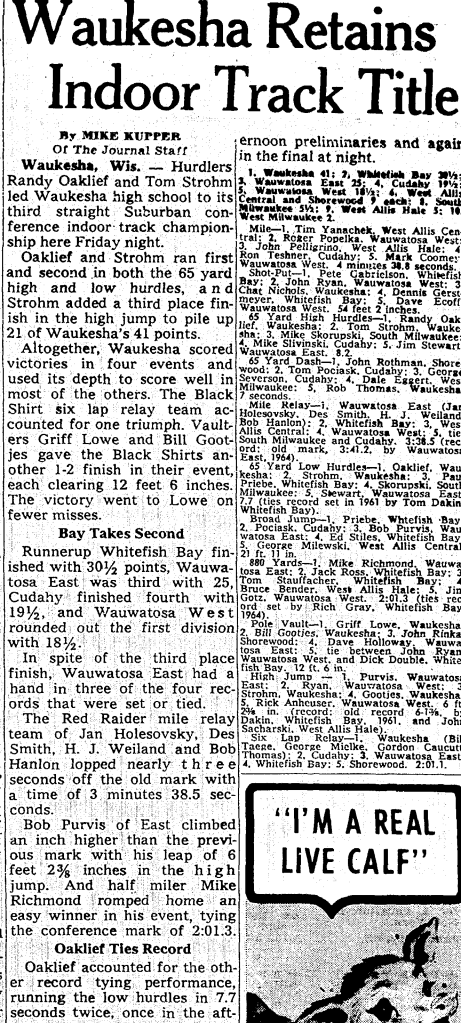
1965 Wangerin
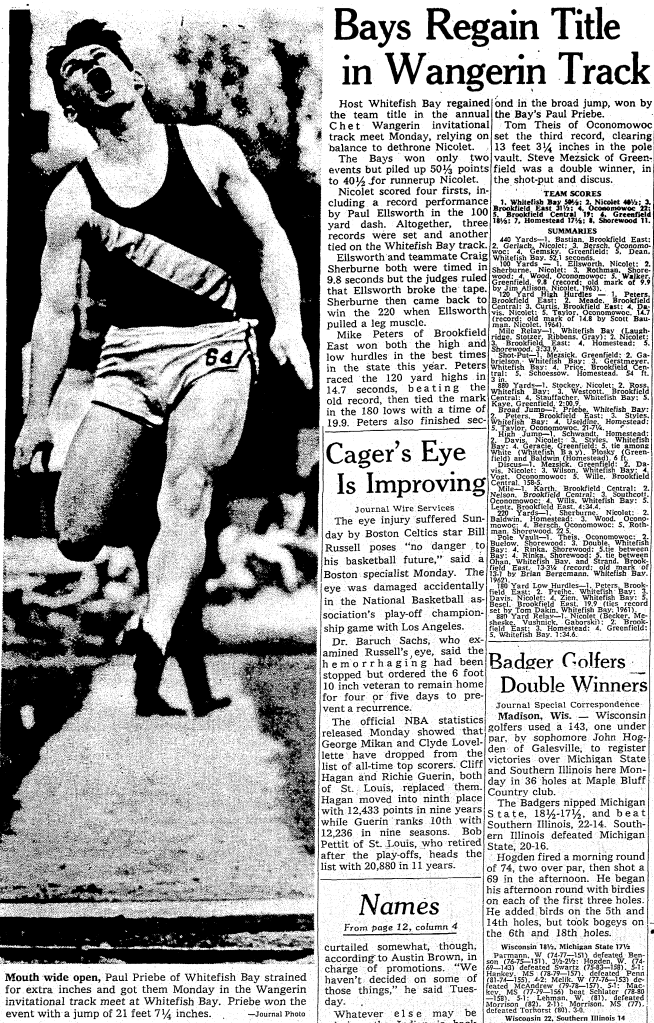
1965 Suburban Relays
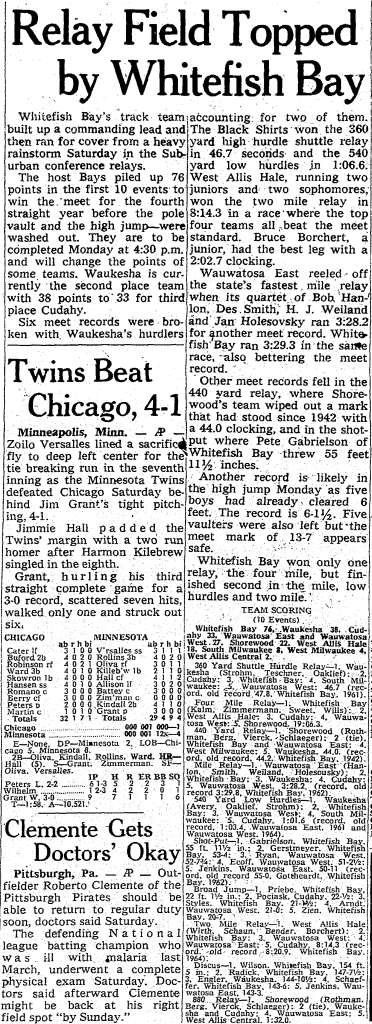
1966 State
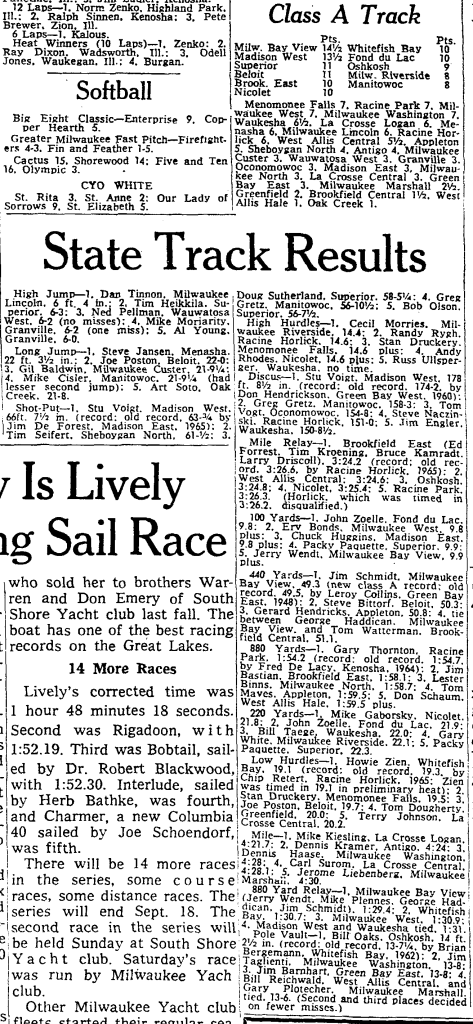
This is a good synopsis of the meet. It shows State records in the Shot Put and Pole Vault, and then the finals of the two sprints, two hurdles and the 880 Relay. The thumbnail magically landed on the Bays Mike Lindemann passing to Howie Zien in the 880 Relay, I’m not kidding. Howie Zien won the 180 low hurdles by a ton.
1966 Grade School Track Meet
The grade school track meets were a big deal and track was a significant portion of the grade school Phy Ed spring curriculum in the 1940s, 1950s and 1960s, starting in 5th grade. There is a reason why the Bay was dominant in track and field in those decades. It didn’t happen by luck or accident.


Thank you for posting these tremendous videos and newspaper articles. My father, Tom Leiser, enjoyed competing for Whitefish Bay both on the field and in the classroom, especially alongside his best friend, Bill Hilgendorf (whom I was named after).
These were wonderful memories for him and tremendous moments in time for our family to cherish and revisit his record-setting days competing for the Blue Dukes in Track & Field and Football with the Class of 1963! 🏆- Bill
LikeLike